

hNEA – the hybrid emergency power system
Developed in collaboration with BKW Energie AG. Successfully field-tested over several years.
Ready to meet the demands of future energy systems.
How it works
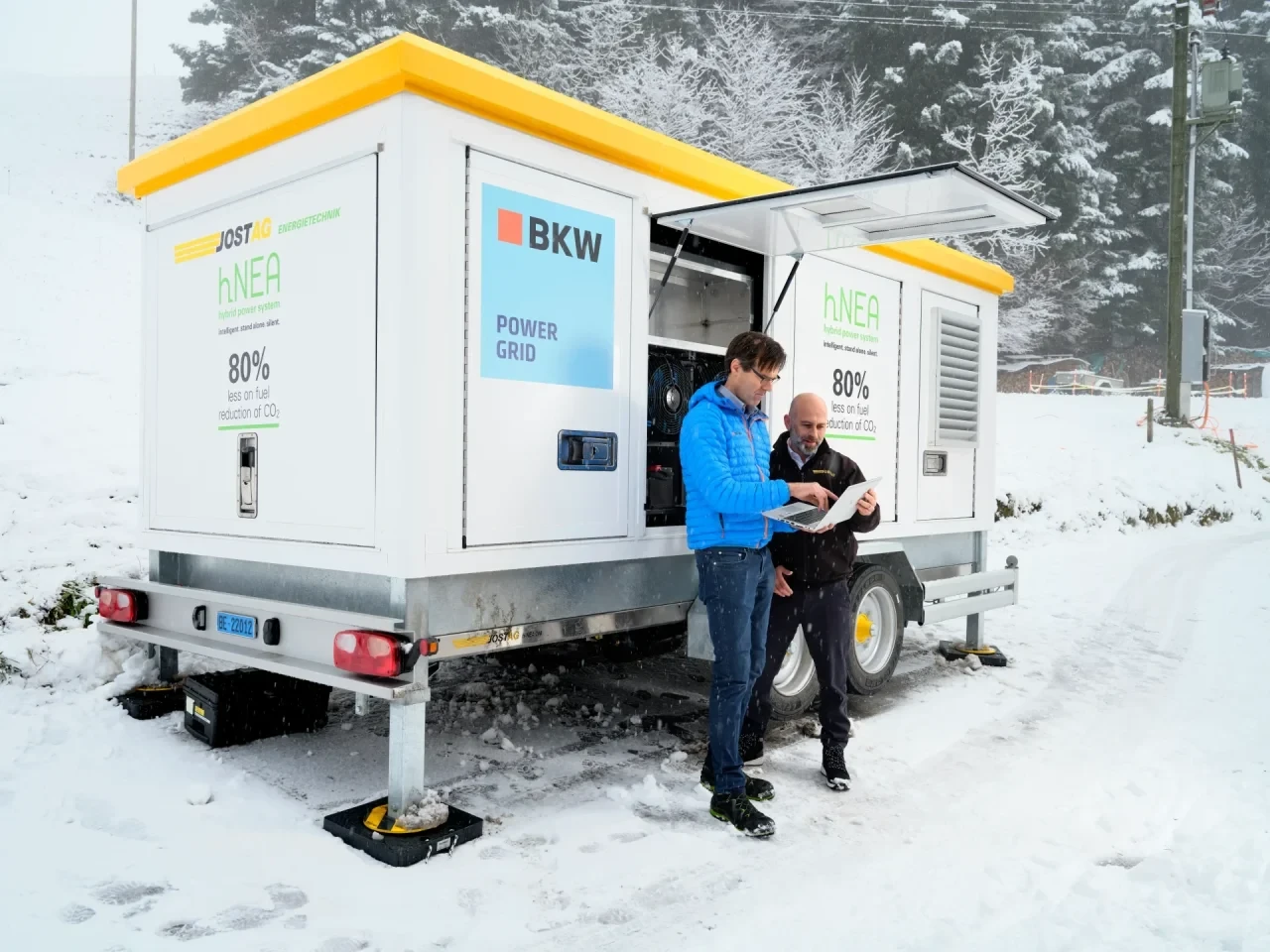
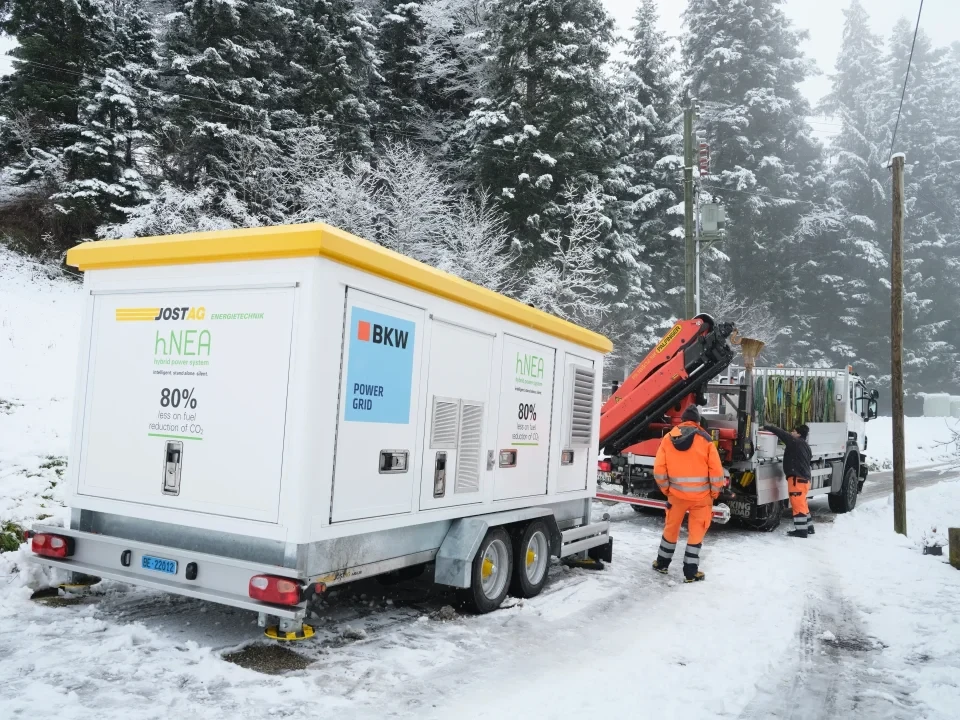
The hNEA hybrid emergency power system combines a diesel engine with a generator, battery storage, two inverters, and a transformer in a single unit. During operation, the diesel engine charges the battery and shuts off as soon as it is fully charged; the battery then supplies power to the grid or to consumers. Only when the battery’s state of charge falls below a defined threshold does the diesel engine restart and recharge the batteries – a charging cycle takes about one hour.
The battery handles peak loads; the diesel engine, with a capacity of 55 kW, is therefore smaller than the system’s peak output and runs only to recharge the battery, exclusively within its optimal torque range. Photovoltaic systems and other generators help charge the storage system; during periods of inactivity, the system runs solely on battery power – at night or during silent operating windows with a generator at standstill.
Models and Performance
Four models in two performance classes. Mobile on a trailer or stationary on a transport frame.
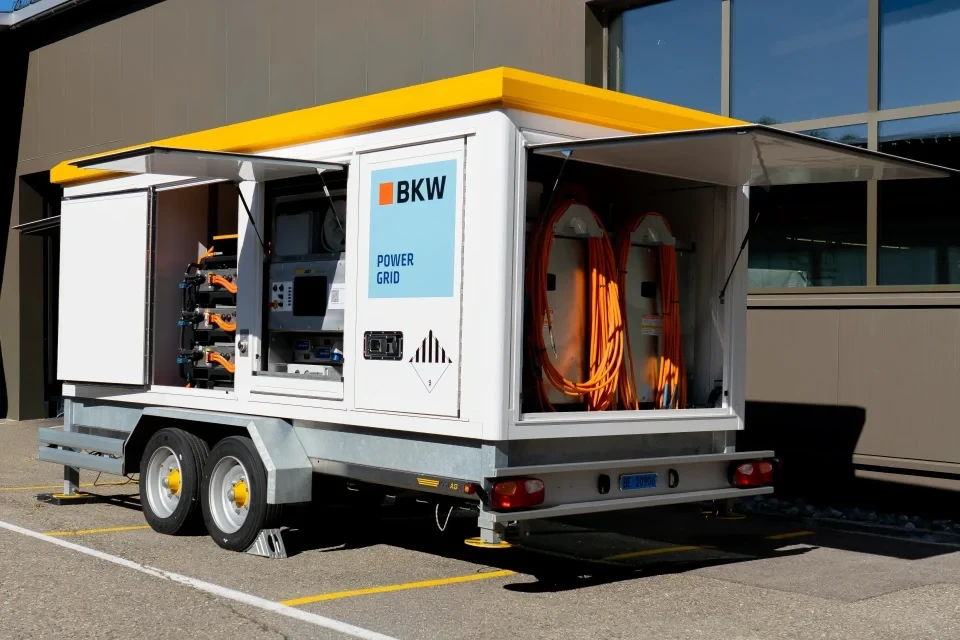
hNEA 200 kVA (mobile)
- 200 kW for 10 seconds
- 100 kW for 15 minutes
- 45 + 50 kW for 30 minutes
- 40 kW continuous generator output
- 5 kW for 8 hours, battery-only operation
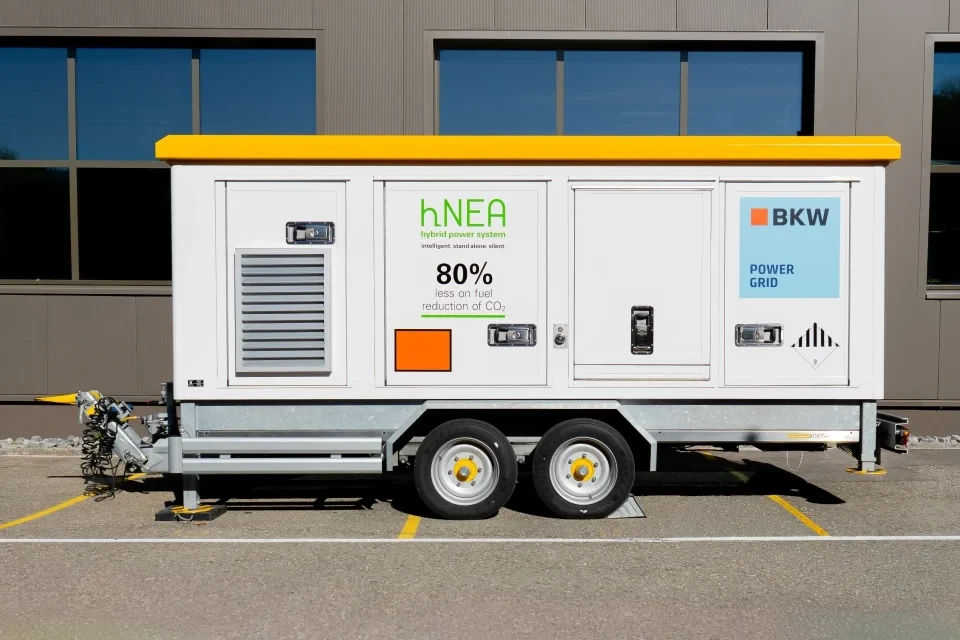
hNEA 400 kVA (mobile)
- 400 kW for 10 seconds
- 200 kW for 15 minutes
- 45 + 100 kW for 30 minutes
- 40 kW continuous generator output
- 10 kW for 8 hours, battery-only operation
Technical specifications (hNEA 200 and 400)
- Soundproof box trailer, approximately 6 metric tons or 7.5 metric tons
- Tandem-axle chassis with EU air brakes, ABS, and EBS
- Height-adjustable drawbar (hNEA 200 only)
- Four hydraulically adjustable supports
- Soundproof, 68 dBA
- 55 kW turbo diesel engine, EU Stage V
- L × W × H: 5,100 × 2,550 × 2,800 mm
- Consumption: 12.5 l/h
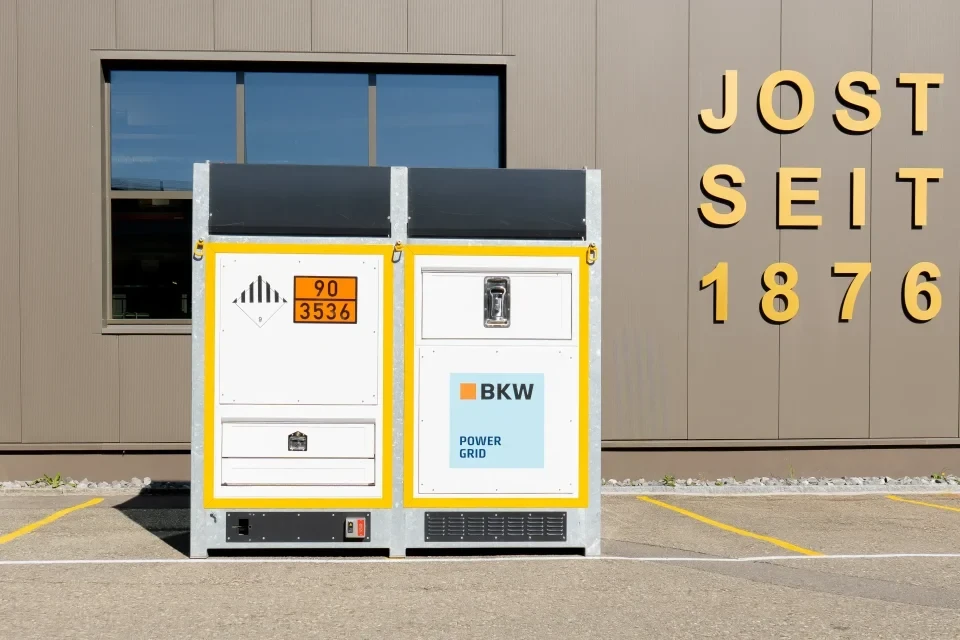
hNEA connect 200 or 400 kVA (on a transport frame)
The stationary version is a steel-tube-frame container – battery storage, inverter, and transformer, without its own diesel engine. It is connected to an existing, synchronizable emergency power system: Its diesel generator charges the battery storage system and shuts down as soon as it is full; the battery then supplies the power, and the generator does not restart until the battery reaches a low state of charge. This means it runs only to recharge rather than continuously – resulting in lower diesel consumption and fewer operating hours. Designed for short-term use and confined spaces.
The performance specifications of the hNEA 200 connect and the 400 connect are the same as those of the hNEA 200 and hNEA 400.
Technical specifications (connect 200 and 400)
- Steel-tube-frame container, hot-dip galvanized
- L × W × H: 2,580 × 2,000 × 2,450 mm
- Total weight: 3,610 kg (varies depending on the number of batteries)
- Without its own diesel engine
- With battery storage, inverter, and transformer
Areas of application
- Power Grid Maintenance – Backup Power Supply During Scheduled Work and Inspections.
- Construction Sites – Power independent of the construction site connection, even during nighttime operations.
- Hospitals – Emergency power with a short switchover time and high availability.
- Military – self-sufficiency with reduced fuel consumption.
- Rural Areas – Power supply during short periods of high demand, without continuous generator operation.
- Mini-grids and off-grid systems – providing power and ensuring stability where there is no grid connection.
References
In continuous operation at BKW
Since 2022, BKW has been using several hNEA units in various power classes and has decommissioned conventional emergency power generators as a result. Since then, the systems have been operating smoothly in the field. At the Emmenmatt site, diesel consumption fell by about 80% (2023 compared to 2019–2022); maintenance costs for the diesel generators were about two-thirds lower than for comparable conventional systems. Read more in the customer magazine “contact” 01|24.
Autonomous island grids: Field tests in Aarberg and Emmenmatt
In two documented field tests (Aarberg 2024, Emmenmatt 2025), hNEA systems formed autonomous mini- and microgrids and operated them stably. In Emmenmatt, four hNEA units equipped with stationary battery storage independently supplied a real 16-kV grid in the catchment area of 17 substations for approximately six hours – disconnected from the main grid and without the use of diesel generators. Documented in the Electrosuisse Bulletin 7/2025.
Further Information
PDF for download
Consulting
We’ll discuss which model is best suited for each application.