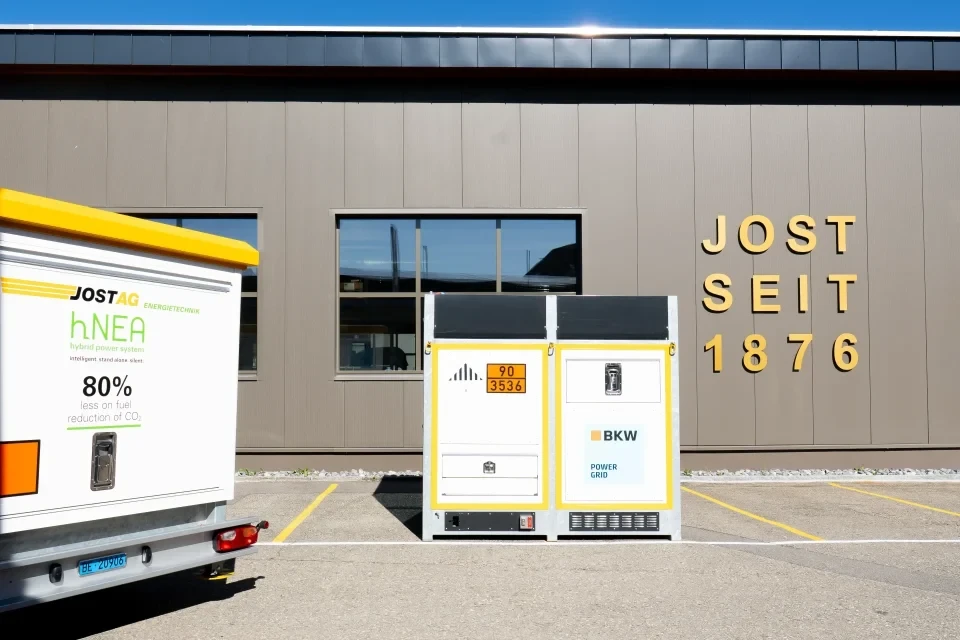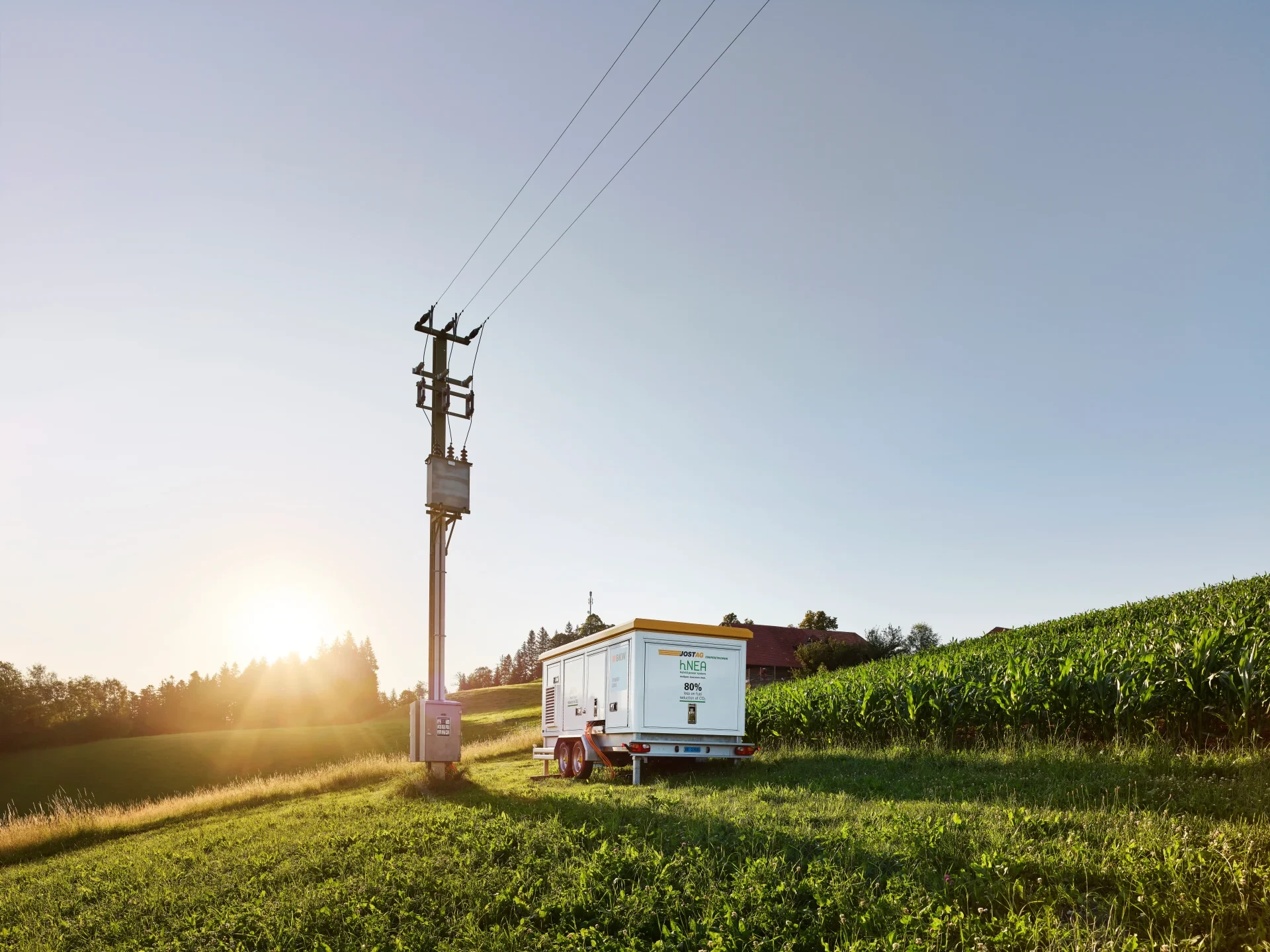
What is hNEA?
In the hNEA hybrid emergency power system from Jost AG, electricity comes primarily from a battery storage system. The diesel engine does not run continuously, as it does in a conventional emergency power system, but starts up only to recharge the battery. Photovoltaic systems and other power generators also charge the storage system.
With intelligent control, the hNEA can also operate an autonomous island grid and synchronize fully automatically with a higher-level grid.
The hNEA was developed in collaboration with BKW Energie AG, one of Switzerland’s largest energy providers. It has been successfully tested in the field over several years – and is ready to meet the demands of future energy systems.
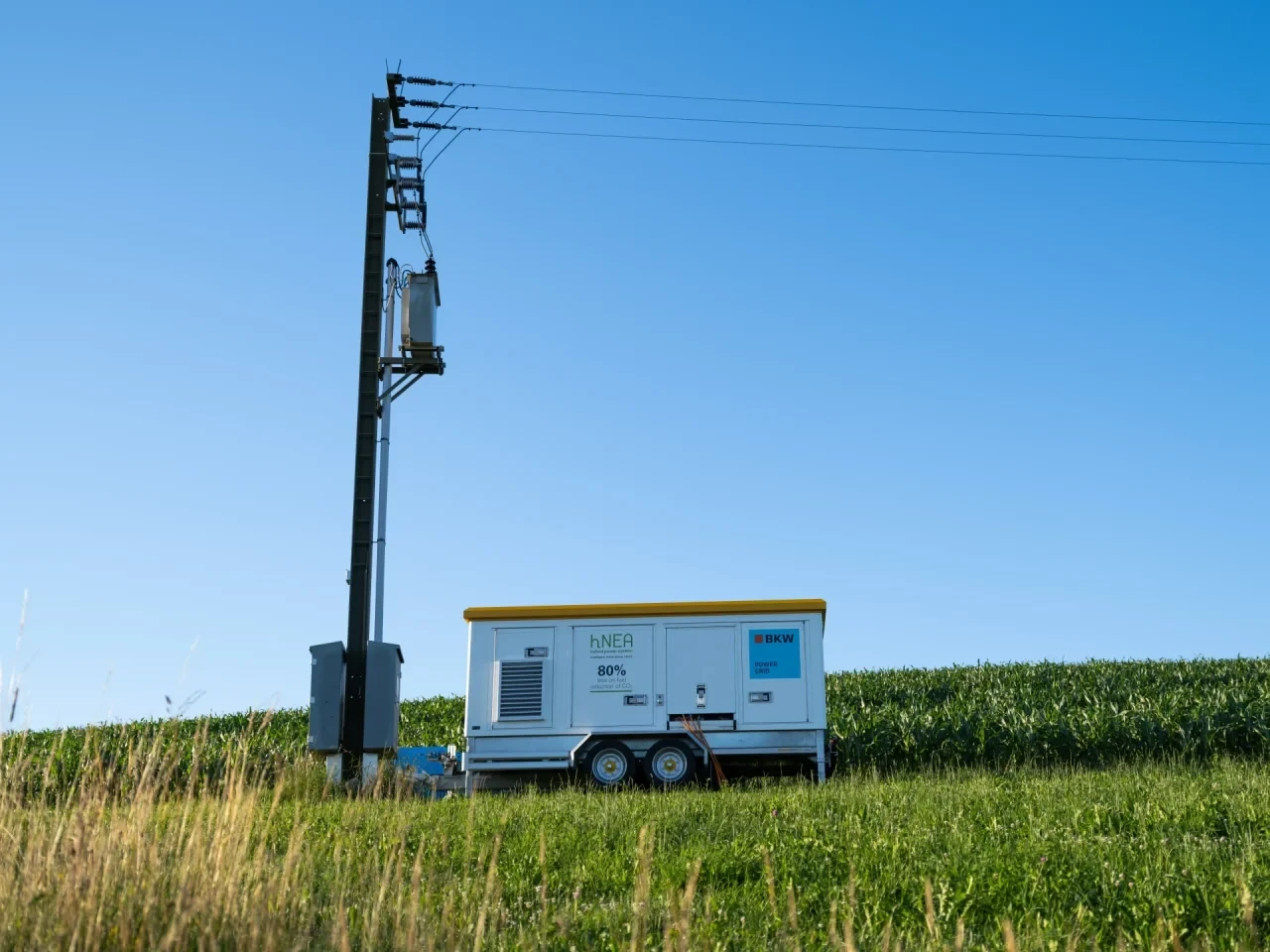
What the hNEA can do
Supplying electricity – to a grid or directly to a consumer.
Acquire electricity – from photovoltaic, hydroelectric, wind, or biomass plants.
Storing electricity – In the integrated battery storage system.
Operating an island grid – independently, as a mini-grid or midi-grid with integrated co-generators.
Synchronize and Disconnect – Automatically connect to and disconnect from a higher-level network.
Black-start capable – startup without an external power source.
Can be combined – with other hNEA systems, larger storage units, or generators.
What the hNEA does
Compared to conventional emergency power systems:
Effect during operation
- 80% less diesel
- 80% less CO₂
- 60% less generator runtime
- Significant Reduction in noise pollution
Cost-Effectiveness
- Payback period: 4.5 years for the additional investment (energy storage system), approximately 7 years for the entire system
- Lower energy, maintenance, operating, and running costs
- Solar power systems do not need to be shut down
- Additional revenue from CO₂ certificates